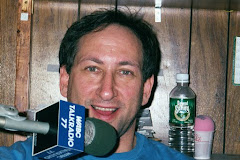
Chuck Prophet - Full preformance live on KEXP
Today’s Cool Album of the Day (#679 in the Series) is Chuck Prophet,
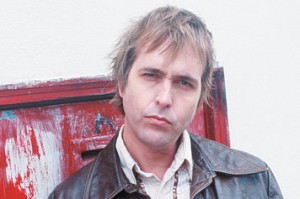
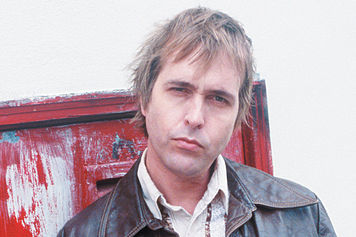
Temple Beautiful (Yep Roc Records)Chuck Prophet has carved out exactly the type of career he would have envisioned when he joined the psychedelic roots rock band Green on Red in the early 80’s. Since then with his musical collaborations with Cake, Kim Carnes, Solomon Burke, and most recently with Alejandro Escovedo where he played guitar and wrote half of the songs for the fine album Real Animal, Chuck has set out on his own uncompromising roots rock journey creating musical masterpieces along way.
Between writing credits for
Warren Zevon, Kelly Willis, Jewel, and
Heart among others, Prophet has released several critically acclaimed albums on his own that while they may be much different in theme and texture, rather than genre hopping, they all seem to be genre enhancing and artistically pure. Developing his style of
Lou Reed speak-singing along the way his solo material has included a political album
iLet Freedom Ring!, a series of suburban noire tunes with
Homemade Blood, and an album of cover songs
, Dreaming Waylon’s Dreams, that was only available on his 2008 tour and recorded as a tribute to one of his idols.
The evolution continues with the latest release Temple Beautiful, a 12 track homage to San Francisco, made in San Francisco, by San Franciscans. While Chuck Prophets’ somewhat alternative perspective of the history of “The City By the Bay” may not be my grandmothers pre-earthquake San Francisco, my parents cable car, play land at the beach, Cliff House San Francisco, or even my own Fillmore West, Cow Palace, Candlestick Park San Francisco. It is however, a brilliant people-centric sort of man on the street historical montage of one of the most beautiful, eclectic, and often misunderstood cities in the world.
Stylistically and musically the record does
not take the easy route and pay tribute to the musical epicenter that was San Francisco in the late 60’s, and in fact there is hardly a direct reference to The Summer of Love, Jefferson Airplane, Haight Ashbury, or the
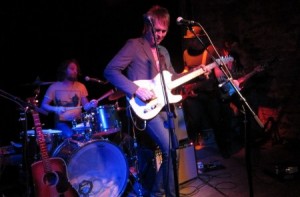
Grateful Dead. There is some jangle pop present, but mostly the vibe is Lou Reed style vocals and lyrically dense word smithing with Chuck Prophets’s signature telecaster providing the real bones of the soundtracks.
The Subject matter that was chosen for these cliff notes version history lessons include “Willie Mays is Up at Bat” that talks the real SF Giants home king Willie Mays, where the baseball Icon is compared to that other buxomly endowed San Francisco treat stripper Carol Doda, who was the first topless, and then the first bottomless stripper in America, and held court for decades in the Condor room on Broadway. Let that settle in for a moment, yes I said decades. “And meanwhile Carol Doda stood up and said “I won’t be ignored” she showed them everything she had and then she showed them all a little more.”
“White Night, Big City” is a beautiful, poignant tribute to slain civil rights leader Harvey Milk who was killed along with Mayor George Mosconi in 1978. The song along with the official video that includes historical footage from those tumultuous times in The City is a somber, reflective tribute to a man that stood up for what he believed in despite what turned out to be insurmountable odds.
“He Came From So Far Away” (Red Man Speaks) obliquely references the occupation of Alcatraz Island, and “Emperor Norton in the Last Days of his Life (1880)” referneces a famous old-time San Francisco eccentric character of a man that would wander the streets of the city providing brilliant oratory to anyone who would listen. Although seemingly homeless he was so well known and entrenched in city life that he would have an open seat at all of the operas and playhouses and have a free ticket to any show that he chose to attend. Chuck Prophet really did his homework with this one.
Once again Prophet takes us to the seedier side of San Francisco with “The Left Hand and the Right Hand” the story of Jim and Artie Mitchell, two brothers whose relationship makes the
Ray and Dave Davies sibling rivalry seem like a Donny and Marie Love-Fest. The onetime owners of the O’Farrell Theatre and producers of one of the first “big budget” XXX rated movies
Behind the Green Door, whose empire came to a crashing end when Artie Mitchell committed fratricide by breaking into his brothers’ home in 1994 and shooting him with a .22 rifle. You know your life must have taken a wrong somewhere when Marilyn Chambers stands up for your defense at your murder trial and Charlie Sheen, in one of the most spot-on examples of type casting since
Pee Wee’s Big Adventure, plays you in a movie as he did in the movie
Rated X alongside his own brother Emilio Estevez.
And of course, no journey through the Streets of San Francisco is complete without a nod to some of the eclectic neighborhood bars scattered the city, and two of Chuck’s favorite watering holes are represented here in The Albion Bar and The Temple Beautiful the bar that also happens to the former home of Jim Jones’ Peoples Temple and also a defunct punk club. For the record, my favorite hang outs are Geno and Carlo’s and Cap’s Corner in North Beach, and The Buena Vista Café on Grant street near Fisherman’s Wharf. Take a listen to the song “Temple Beautiful” and see why it is on heavy rotation on the Little Steven Underground Garage satellite radio broadcast where it is considered “One of the Coolest Songs in the World”.
To provide that extra dose of S.F. Rock and Roll authenticity legendary bay area drummer Prairie Prince, who has played with both
Journey and
The Tubes, appears on the album along with Roy Loney of the famous San Francisco –centric garage band The Flaming Groovies.
Even if the subject matter were not so close to my heart this
record would still be considered by me to be one of the best albums of the year, if not one of the best in recent years. It is thoughtful, introspective, and handles important subject matter with an artistic delicate brush that warrants careful and frequent listens to fully appreciate and understand the historical and socio-political landscape that is presented.
On February 7th 2012, the day the album was released, a guided bus tour was offered of the sights and sounds presented in Temple Beautiful. Those lucky enough to be on that bus were treated to a an almost first person voyage back in time via the way-back machine courtesy of the perspective of a brilliant artist and a brilliant album.
I just wish I could have been there.


 not take the easy route and pay tribute to the musical epicenter that was San Francisco in the late 60’s, and in fact there is hardly a direct reference to The Summer of Love, Jefferson Airplane, Haight Ashbury, or the Grateful Dead. There is some jangle pop present, but mostly the vibe is Lou Reed style vocals and lyrically dense word smithing with Chuck Prophets’s signature telecaster providing the real bones of the soundtracks.
 Once again Prophet takes us to the seedier side of San Francisco with “The Left Hand and the Right Hand” the story of Jim and Artie Mitchell, two brothers whose relationship makes the Ray and Dave Davies sibling rivalry seem like a Donny and Marie Love-Fest. The onetime owners of the O’Farrell Theatre and producers of one of the first “big budget” XXX rated movies Behind the Green Door, whose empire came to a crashing end when Artie Mitchell committed fratricide by breaking into his brothers’ home in 1994 and shooting him with a .22 rifle. You know your life must have taken a wrong somewhere when Marilyn Chambers stands up for your defense at your murder trial and Charlie Sheen, in one of the most spot-on examples of type casting since Pee Wee’s Big Adventure, plays you in a movie as he did in the movie Rated X alongside his own brother Emilio Estevez.
 Posts
Posts